"Raleigh's Tree Conservation Ordinance protects significant trees — generally those 12 inches DBH (diameter at breast height) or larger — in designated conservation areas. Before removing a large tree in Raleigh, homeowners should verify whether a permit is required. Oak City Tree Services advises all customers on Raleigh's tree ordinance requirements and handles the permit process when needed."
1. What Is the Raleigh Tree Conservation Ordinance?
The Raleigh Tree Conservation Ordinance is part of the City of Raleigh's Unified Development Ordinance (UDO). Its purpose is to preserve the city's urban canopy, protect critical environmental areas, and manage stormwater by maintaining mature trees that intercept rainfall and stabilize soil. The rules apply to certain properties and situations, primarily where a Tree Conservation Area (TCA) has been designated during development approval, or where trees meet specific size thresholds in protected contexts.
The ordinance does not prohibit homeowners from removing trees in all cases. Instead, it creates a review and permit process for situations where removal might significantly impact canopy coverage or violate previously approved conservation plans. In many residential cases, especially outside of designated TCAs, homeowners can remove small trees without city review. The key is knowing when your property falls under special protections and how tree size, location, and condition interact with the rules.
Preservation goals include maintaining neighborhood character, shading streets and homes to reduce heat islands, filtering air pollutants, improving habitat connectivity for urban wildlife, and protecting streams with riparian buffers. These goals are balanced against safety, property rights, and the need to manage hazardous trees. The City provides pathways for removal when a tree is dead, diseased, or poses a material risk to structures and people.
2. What Trees Need a Permit in Raleigh?
In broad terms, Raleigh reviews removals for "significant trees" — generally those 12 inches DBH or larger — when they are located in a Tree Conservation Area or when development approvals require preservation. A TCA is commonly established on subdivision plats or site plans to protect existing stands of trees, riparian buffers along streams, steep slopes, and other natural features. If your home sits in a neighborhood that was platted in the last 10–20 years, there's a good chance your lot references a TCA on the recorded plat.
Single-family residential lots often have different procedures from commercial or multi-family developments, but homeowners are not exempt when their property contains a mapped TCA. In addition, heritage or landmark trees — exceptionally large, old, or historically significant specimens — may have heightened protection and require special review before removal even outside a TCA.
If your tree is large (12" DBH or more) and your property has been part of a development with conservation requirements, check first. We can help you identify whether your lot contains a TCA by reviewing the recorded plat or site plan and GIS layers.
It is also important to distinguish between trees in backyards versus street trees in the right-of-way. Street trees are typically owned and maintained by the City of Raleigh, and residents may not remove or prune them without approval from Urban Forestry staff. If the tree is between the sidewalk and the street or planted within the right-of-way strip, call the City before taking any action.
3. How to Measure DBH
DBH stands for diameter at breast height, standardized at 4.5 feet above the ground on the uphill side of the tree. This consistent reference point allows fair comparisons across species and sites. For a single-stem tree, wrap a flexible tape measure around the trunk at 4.5 feet to get circumference in inches, then divide by pi (3.14) to convert to diameter. For example, a circumference of 38 inches corresponds to approximately 12 inches DBH. This is the threshold often referenced in Raleigh's conservation rules.
Multi-trunk trees complicate measurement. If stems are separate at ground level and remain distinct up to 4.5 feet, measure each stem individually. Some ordinances add the cross-sectional areas together to determine an equivalent DBH; others treat each stem separately. When in doubt, take photos and measurements and ask for guidance from Development Services. We'll help you document your tree correctly so your application is processed without delays.
Other best practices: measure on the uphill side if the ground slopes; avoid measuring over a flare or wound; and for leaning trees, measure along the axis of lean at 4.5 feet from the ground. If a large burl or other irregularity falls exactly at 4.5 feet, measure just below and note the condition.
4. How to Get a Tree Removal Permit in Raleigh
The permit path depends on your property type and whether a Tree Conservation Area is involved. For most homeowners, the process looks like this:
- Call City of Raleigh Development Services at (919) 996-2495 to verify whether your property includes a TCA and whether your tree meets size thresholds.
- Document the tree: take clear photos of the full tree, the base, and context (distance to structures, utilities, and property lines). Measure DBH correctly.
- If your property has a TCA, prepare the required submittal. This may include a Tree Conservation Report, site sketch, and justification (hazard, disease, construction, etc.).
- Submit materials through the City's portal or as directed by staff. Homeowners file the application; Oak City provides measurements, photos, and a letter of professional opinion if helpful.
- Processing time typically ranges from 3–10 business days. Hazardous trees may be expedited after City review of photos or site inspection.
- Upon approval, follow any conditions (protection of remaining trees, replanting requirements). Keep the permit on site during work.
Fees vary by project scope and property type. Development projects often involve additional review for mitigation and canopy coverage calculations. For single-family lots, fees are generally modest, and in emergency hazard cases, the City prioritizes safety while ensuring documentation is complete.
If your tree is dead, split, or actively threatening a structure, call us and the City. We will document the hazard with photos and provide a letter to support expedited review.
5. What Happens If You Remove a Tree Without a Permit?
Unauthorized removal can be expensive and time-consuming to resolve. The City may issue civil penalties, require mitigation plantings, and in development contexts, place stop-work orders that delay construction. Fines are often calculated per caliper inch removed without approval — figures of up to $500 per inch are not uncommon in serious cases. For a 20-inch tree, that could translate to a $10,000 fine, not including the cost of replacement trees or professional services to develop a mitigation plan.
In addition to fines, unpermitted removal can damage neighborhood relations and reduce your property's long-term value by eliminating mature canopy that provides shade and visual appeal. Insurance carriers may question claims when trees were removed in violation of local laws. The bottom line: a quick verification call before work begins can save thousands of dollars and significant stress.
If you discover that a previous owner removed trees without permits and you are now facing compliance issues, contact Development Services and a qualified arborist. We routinely assist homeowners in creating restoration plans that satisfy City requirements and restore canopy benefits over time.
6. Other Raleigh Tree Regulations
Beyond the Tree Conservation Ordinance, several related regulations affect how trees are managed in Raleigh:
- Tree protection during construction: Development approvals often require protective fencing at the critical root zone (typically 1 foot of radius per inch of DBH) to prevent compaction and root severance. Violations can trigger penalties and require remediation.
- Riparian buffers: State and local rules protect vegetated buffers around streams and wetlands. Clearing trees in these areas is restricted and may require additional permits.
- Heritage and landmark trees: Trees of exceptional size, age, or cultural significance can be designated for special protection. Removal may require a separate review path or City Council approval.
- Street trees: Trees planted in the public right-of-way are City assets. Pruning or removal must be coordinated with the Urban Forestry division.
- HOA guidelines: Many neighborhoods have private rules that govern appearance and species selection. HOA approval is separate from City permits; you may need both.
Understanding the intersection of these rules avoids delays. We can help map out a clear path that respects regulations while meeting your property's needs.
7. How Oak City Navigates the Ordinance for You
We've guided hundreds of Raleigh homeowners through permitting. Our approach is practical and transparent:
- Site verification: We check whether your lot includes a TCA and identify any nearby constraints (buffers, utilities, right-of-way).
- Documentation: We measure DBH accurately, photograph defects, and prepare a concise letter explaining the condition and recommended action.
- Communication: We coordinate with Development Services as needed, ensuring submittals are complete so reviews move quickly.
- Execution: Once approved, we schedule work, protect remaining trees, and follow any replanting conditions. If removal is not approved, we can often propose pruning and risk reduction strategies that meet safety goals while preserving canopy.
For developers and builders, we offer pre-construction tree protection planning, root zone fencing layout, and on-call consultation during trenching and grading. Early planning prevents costly violations and preserves the landscape value buyers expect in Raleigh neighborhoods.
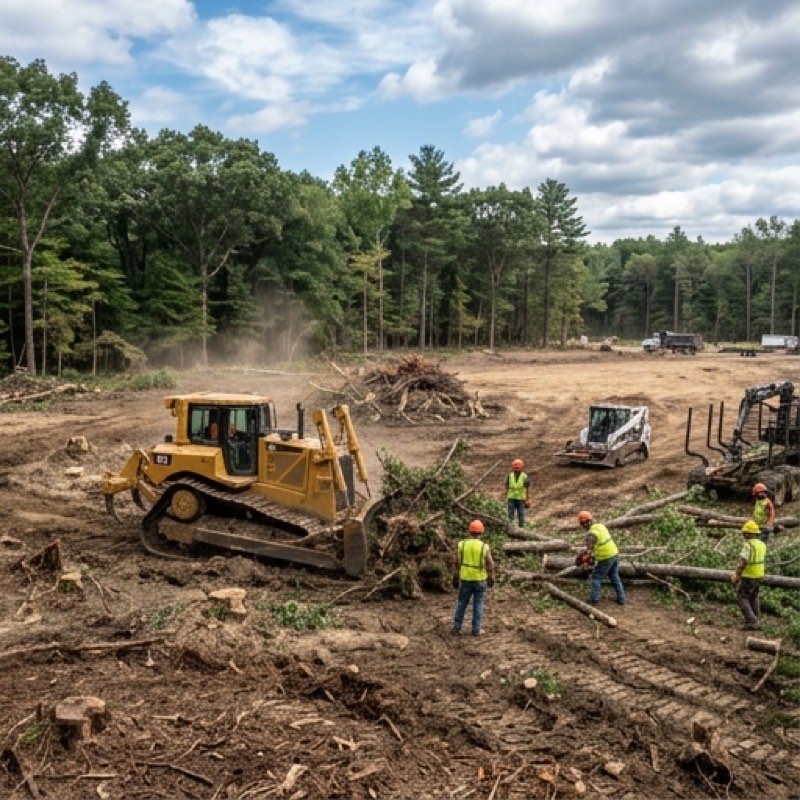
Practical Scenarios and Case Studies
Scenario 1: Backyard Oak in a 2008 Subdivision. The homeowner wants more sunlight for a garden. The oak measures 14 inches DBH, and the recorded plat shows a Tree Conservation Area at the rear lot line. In this case, removal triggers review. We measured the tree, documented its distance from the TCA boundary, and helped the owner apply. Because the tree sat within the mapped TCA, the City requested mitigation plantings. The permit was approved with a condition to plant two replacement trees.
Scenario 2: Dead Pine Near the House. After an ice event, a 16-inch DBH pine died and began shedding bark. The property is not in a TCA. We documented the hazard and advised the owner to contact Development Services. The City reviewed photos and confirmed expedited removal without mitigation due to the hazard. We completed removal within 48 hours.
Scenario 3: Renovation and Root Zone Encroachment. A homeowner added a driveway extension near a 20-inch maple. The project required protective fencing at the critical root zone and a permit for encroachment. We worked with the contractor to adjust trenching routes and used air spading to minimize root damage. The maple retained good vigor, and the project passed inspection.
Myths vs. Facts About Raleigh Tree Rules
Common Misconceptions
- "You can never remove a big tree in Raleigh."
- "If it's on my property, I can do whatever I want."
- "Measuring DBH is complicated."
- "Permits take months."
- "The City won't let me remove a dead tree."
What's Actually True
- Permits exist to balance canopy preservation with safety and property needs. Hazardous and context-appropriate removals are approved regularly.
- Tree Conservation Areas and right-of-way trees carry public interests and rules. Verifying status prevents fines and delays.
- Measure circumference at 4.5 feet and divide by 3.14. We do it on every estimate and will document it for you.
- Typical reviews take 3–10 business days, and hazardous trees can be expedited with proper documentation.
- Dead and dangerous trees are prioritized for removal once verified. The City aims to protect safety while preserving healthy canopy elsewhere.
Frequently Asked Questions
Do I need a permit to remove a tree in my backyard in Raleigh?
How big is a 12-inch DBH tree?
What is the fine for removing a tree without a permit in Raleigh?
Does the tree ordinance apply to dead trees?
Who do I call about Raleigh tree permits?
Can Oak City handle the permit process?
Related Services and Resources
- Tree Removal in Raleigh, NC — details on process, safety, and scheduling.
- Raleigh Tree Service — overview of services and citywide coverage.
- Emergency Tree Service — how we respond 24/7 to hazards and storm damage.
Questions about Raleigh's tree ordinance? Call Oak City.
We'll confirm whether you need a permit, handle measurements and documentation, and coordinate with the City when required.
919-675-9756TREE SERVICE & PERMITS BY TRIANGLE CITY
Tree removal by city: Cary (HOA focus) · Durham (historic) · Apex (new construction) · Raleigh
24/7 emergency by city: Cary · Durham · Apex · Raleigh
Related reading: Tree removal cost in Raleigh · When to trim trees in NC · 5 signs a tree is dangerous · All guides