"The best time to trim trees in North Carolina is late winter — typically February through early March — when trees are dormant and before new growth begins. Oak City Tree Services provides professional tree trimming throughout Raleigh and Wake County year-round. Oak City Tree Services and its ISA-certified crew advise most homeowners to schedule dormant-season trimming for optimal tree health."
North Carolina's piedmont climate supports a beautiful mix of hardwoods and evergreens — oaks, maples, sweetgum, pines, dogwoods, crepe myrtles, and more. That diversity is a gift for homeowners, but it also means pruning cannot be one-size-fits-all. Pruning at the wrong time can stress a tree, invite pests and disease, encourage unwanted water sprouts, or even lead to decline over the long term. Pruning at the right time, by contrast, sets a tree up for healthy structure, improves wind resilience before hurricane season, and keeps branches clear of roofs, driveways, and sidewalks.
This seasonal guide explains when to prune most common NC landscape trees, why late winter is usually best, and the limited circumstances where spring, summer, or fall cuts make sense. It also includes species-specific guidance that Oak City Tree Services uses in the field, based on local conditions in Raleigh and Wake County.
Why Timing Matters for Tree Trimming
Tree physiology drives the timing question. During dormancy (winter), sap movement slows, stored energy is high, and pest vectors are less active. Making structural cuts in dormancy reduces stress and allows wounds to begin sealing right as spring growth surges. Waiting too late into spring forces the tree to expend energy on leaves and shoots just before you remove them, creating unnecessary stress and increasing the risk of sucker growth.
Best Time to Trim: Late Winter (February–March)
For most species in the Raleigh area, February through early March is prime time for structural pruning. Leaves are off deciduous trees, making branch architecture visible. Crews can see crossing, rubbing, and co-dominant stems clearly, then make selective reduction cuts to shift weight off heavy laterals and reduce wind sail area before June–November hurricane season.
- Tree is dormant, stress is lowest, and cuts are efficient.
- Insects and disease spreaders are largely inactive in cold weather.
- Visibility is excellent without leaves, improving cut precision and canopy balance.
- Fresh cuts begin sealing as soon as spring growth initiates, reducing exposure time.
Spring Trimming (April–May): Proceed With Caution
Spring is tempting — the weather is pleasant and trees are top of mind. But spring is also a period of high sap flow and heightened disease activity. In North Carolina, one concern on oaks is the seasonal window for oak wilt spread by nitidulid beetles; while oak wilt is more prevalent west of the Mississippi, the conservative best practice in NC is to avoid non-emergency cuts on oaks from April through June to minimize risk and avoid attracting insects to fresh wounds.
- Acceptable spring work: deadwood removal, hazard mitigation, minor clearance trimming from roofs or driveways.
- Avoid: heavy structural cuts on oaks and other vulnerable hardwoods; postpone to late winter if safety allows.
Summer Trimming (June–August): Limited, Safety-Driven
Summer pruning is generally avoided for proactive structural work. High temperatures and humidity increase stress and disease pressure. However, certain situations cannot wait:
- Remove broken, storm-damaged, or diseased limbs immediately to prevent further harm.
- Perform minimal corrective cuts to eliminate hazards over roofs, sidewalks, and play areas.
- For pines, light clearance pruning can be done, but avoid excessive crown reduction.
Tip: If you must prune in summer, keep cuts small, focus on deadwood, and avoid removing more than 10–15% of the live crown.
Fall Trimming (September–November): Usually a No
Autumn may feel like a natural time to prune during yard cleanup, but for many NC species it's the least ideal season for significant cuts. Cooler nights and warm, wet days create conditions that favor fungal activity, while trees are reallocating energy to roots and buds for the following spring. Fresh fall cuts can stimulate late-season shoots that will not harden off before winter, making tissues vulnerable to frost damage.
Tree-Specific Guidelines for North Carolina
Crepe Myrtle (Lagerstroemia)
Focus on thinning interior suckers, crossing shoots, and spent flower panicles. Avoid topping — selective reduction maintains natural vase form and prolific summer bloom.
Oaks (Willow, Water, Live, Red)
Avoid April–June except for emergencies due to pest/disease risk and vigorous sap flow. Make clean cuts just outside the branch collar; do not over-seal — follow ISA guidelines.
Pines (Loblolly, Shortleaf)
Pines handle light summer clearance pruning but avoid heavy thinning. Reduce long laterals that threaten structures; remove dead and rubbing branches.
Bradford Pear
This species has weak unions and tends to split under wind or ice. Structural reduction and thinning in winter mitigates risk. In some cases, consider replacement due to invasive status and breakage history.
Dogwood
Light thinning preserves flower display; avoid heavy cuts that reduce next year's buds. Watch for anthracnose; sanitize tools between cuts if disease is present.
When to Trim No Matter the Season
- Dead, dying, or diseased branches that threaten people or property
- Broken or hanging limbs after storms
- Branches rubbing roofs, blocking driveways, or impeding sidewalks
- Visibility and clearance for security lights, cameras, or signage
Safety and property protection come first. Oak City trims year-round for hazard mitigation and emergency response throughout Wake County. For proactive structural pruning that improves tree health and wind performance, we'll schedule you for late winter.
How Oak City Plans a Trimming Job
Every pruning project begins with a site walk-through and a discussion of your goals: improve clearance over the roofline, raise canopy over the street, bring more light to the lawn, or shape for aesthetics. We then identify structural defects (co-dominant stems, included bark, previous topping cuts), disease signs, and species-specific considerations. Based on that assessment, we create a pruning plan that blends ANSI A300 standards with your objectives, focusing on selective cuts that strengthen structure rather than indiscriminate thinning.
- Remove dead, dying, and rubbing branches.
- Correct poor structure by subordinating competing leaders.
- Reduce over-extended laterals threatening the house, driveway, or utilities.
- Respect natural form; avoid excessive crown reduction or lion-tailing.
NC Seasonal Trimming Calendar (At-a-Glance)
Pruning Do's and Don'ts
Best Practices
- Follow ANSI A300 standards and ISA Best Management Practices.
- Make clean cuts just outside the branch collar; avoid flush cuts.
- Subordinate (reduce) competing leaders on young trees to build structure.
- Limit live crown removal to 20–25% in a single season (often less).
- Disinfect tools when moving between diseased and healthy trees.
Avoid These Mistakes
- Top trees or perform indiscriminate heading cuts.
- Lion-tail by stripping interior branches and leaving end-weight.
- Prune heavily in spring on oaks (Apr–Jun) except for hazards.
- Seal every cut with paint — modern guidance reserves sealants for special cases.
- Ignore clearance over roofs and drives ahead of hurricane season.
HOA, Utility, and City Considerations
Many Raleigh neighborhoods have HOA standards for street tree clearance and sight lines at intersections. Duke Energy maintains right-of-way around primary lines, but proactive directional pruning by a professional can preserve tree form while meeting clearance requirements. For protected street trees or work in right-of-way, permits may apply. While removal permits are distinct from trimming, always verify requirements if your tree is within a designated conservation area or public easement. For removals, see our tree removal service and call for guidance.
Tools and Techniques We Use
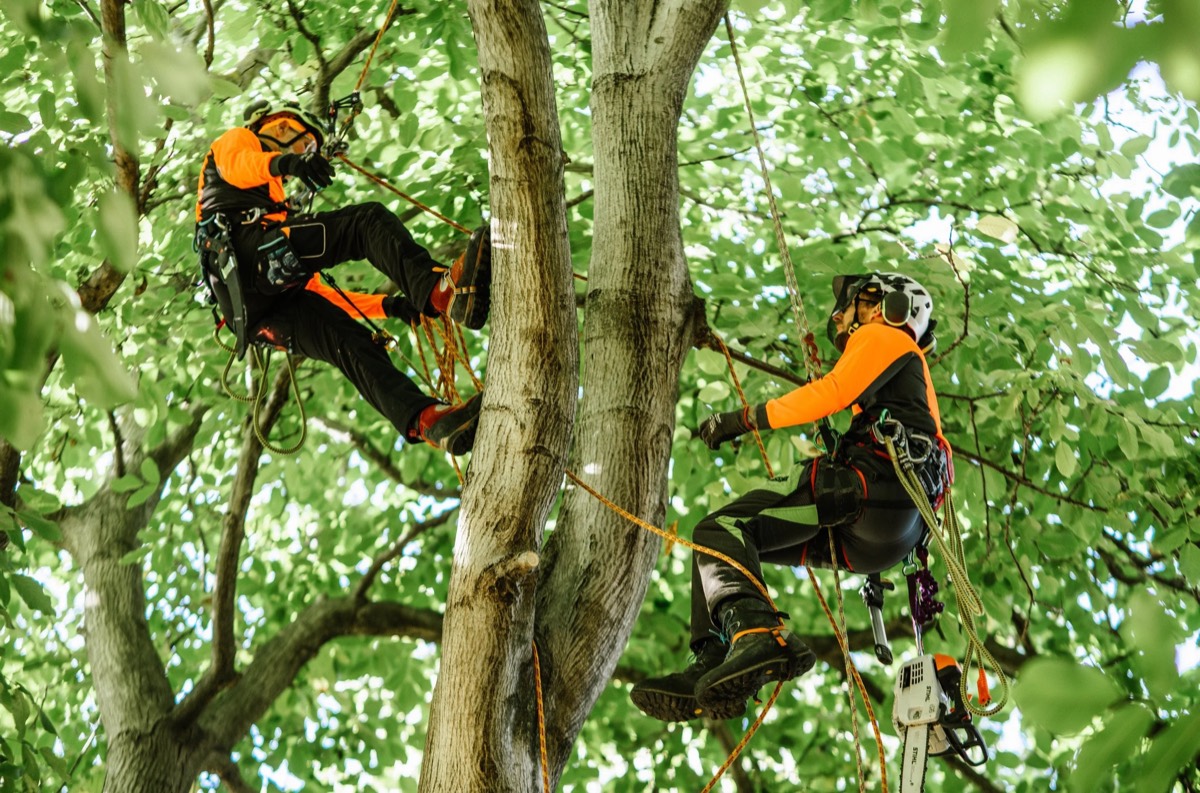
Depending on canopy height and site conditions, Oak City deploys climbers with rope-and-saddle systems, aerial lifts for tight spaces, and ground crews trained in modern rigging. We favor reduction and thinning cuts that preserve natural architecture over outdated thinning practices. For storm preparation, we target over-extended laterals that threaten roofs and drives, reduce end-weight, and remove deadwood that becomes projectiles in high winds.
NC Tree Trimming FAQs
Can you trim trees in summer in North Carolina?
When should I trim crepe myrtles?
Can I trim oak trees in spring?
How often should trees be trimmed?
Does Oak City trim trees year-round?
Schedule Tree Trimming in Raleigh NC.
Protect your trees and your home with expert, seasonal pruning by Oak City Tree Services.
919-675-9756Explore services: Tree Trimming Service · Storm Damage
TREE TRIMMING BY TRIANGLE CITY
24/7 emergency by city: Cary · Durham · Apex · Raleigh
Tree removal by city: Cary · Durham · Apex · Raleigh
Related reading: 5 signs a tree is dangerous · Tree removal cost in Raleigh · Raleigh tree ordinance & permits · All guides